Processing troubleshooting guide · September 2026

PVC edge banding and PVC foam board processing defects: six diagnostic checks

A practical, evidence-aware workflow for cabinet factories, fabricators, distributors and importers investigating repeat production defects.

Direct answer

Do not approve a material by appearance alone. Isolate the symptom, record the panel or board grade, adhesive or ink system, tool and machine conditions, then test a representative part. For PVC edge banding, review the glue joint, finishing sequence and roll feed. For PVC foam board, review CNC heat and chip removal, flat storage and the actual printing or lamination system.

Visual disclosure: the six images are AI-generated process illustrations, not records of a specific factory batch, stock position, inspection result or shipment.

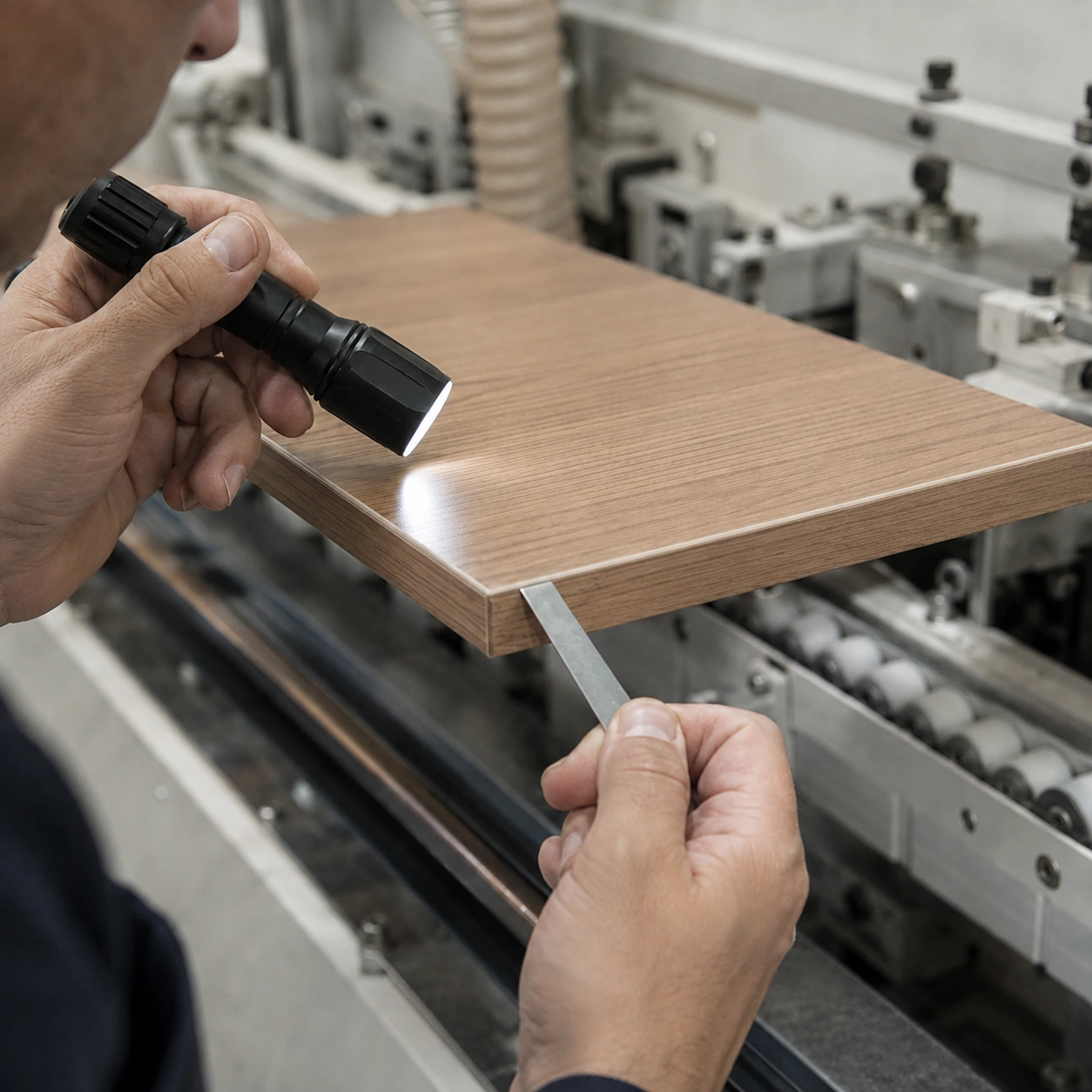
AI-generated close inspection of a PVC edge banding glue joint on a finished woodgrain furniture panel
AI illustration: inspecting a finished PVC edge-banding seam under production conditions.
1 · Glue joint

A visible glue line is a diagnostic signal

A gap or weak bond can involve the board edge, dust, adhesive condition and application, pressure, material temperature, feed stability, strip curvature or machine setup. Change one controlled variable at a time and inspect more than one point along the panel.

  • Record panel, adhesive, edge-band code, dimensions and machine conditions.
  • Inspect straight edges and corners after the full trimming and finishing sequence.
  • Keep the approved panel and settings as the repeat-order reference.

AI-generated inspection of subtle stress whitening on a dark rounded PVC edge banded panel
AI illustration: checking a dark rounded PVC edge after scraping and buffing.
2 · Stress whitening

White marks after scraping need a finishing-system review

A pale line on a dark edge or tight radius may be related to scraper condition, chip removal, radius, pressure, material conditioning or the interaction of the strip and machine. Compare the part before and after trimming, scraping and buffing.

  • Separate straight-edge symptoms from corner-radius symptoms.
  • Document tool condition and finishing settings before adjusting them.
  • Retain a physical sample; a phone-screen color is not a processing standard.
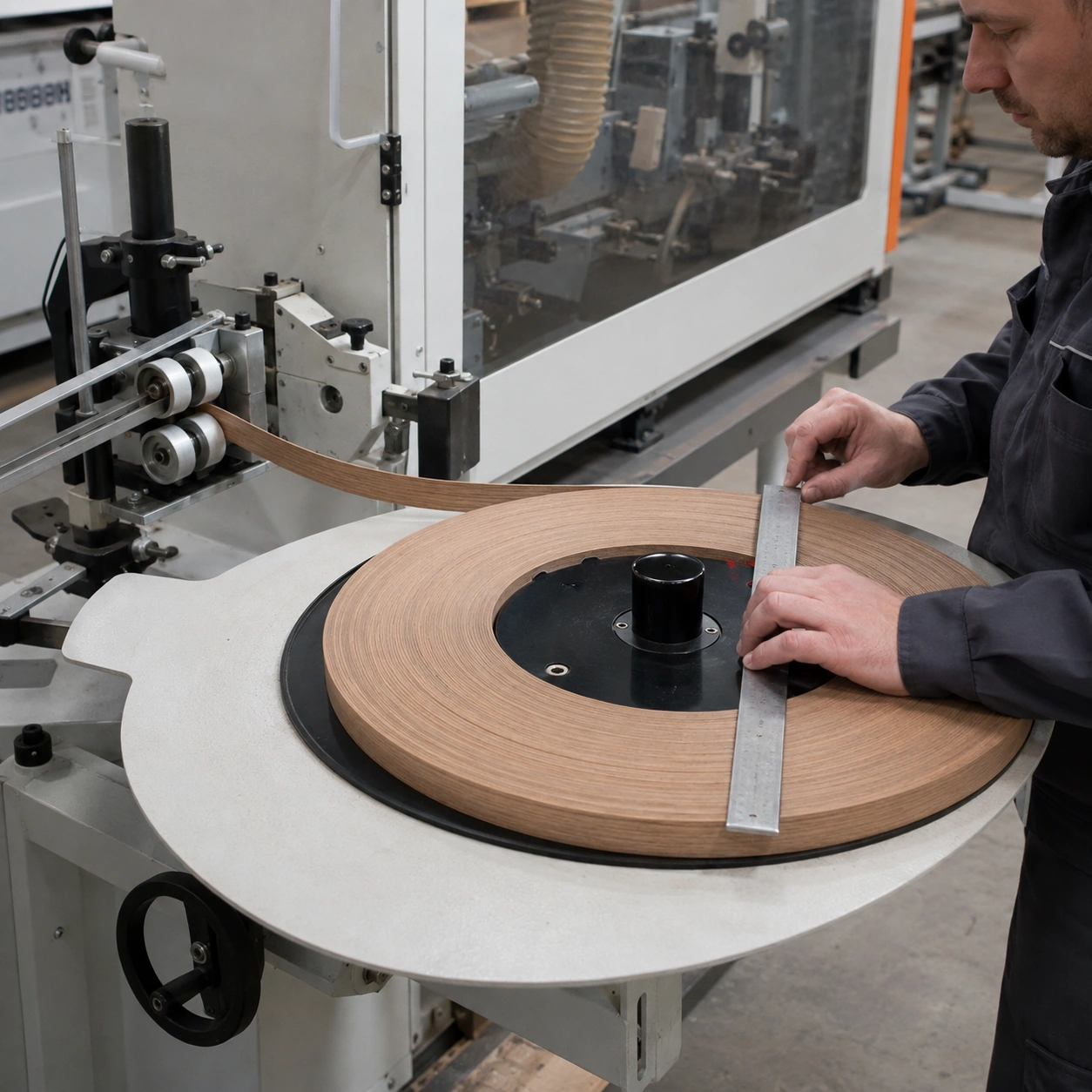
AI-generated PVC edge banding coil feeding through guide rollers with alignment inspection
AI illustration: checking coil winding and alignment at an edge-banding feeder.
3 · Roll feed

Winding and alignment affect machine feeding

Telescoping, damaged roll edges, inconsistent curvature, contamination or feeder misalignment can interrupt production even when the decor looks correct. Incoming inspection should review the complete coil and its tracking through the guides.

  • Confirm code, decor, width, thickness, roll direction and core.
  • Inspect both roll faces and edges before loading.
  • Protect coils from pressure and deformation during storage and handling.
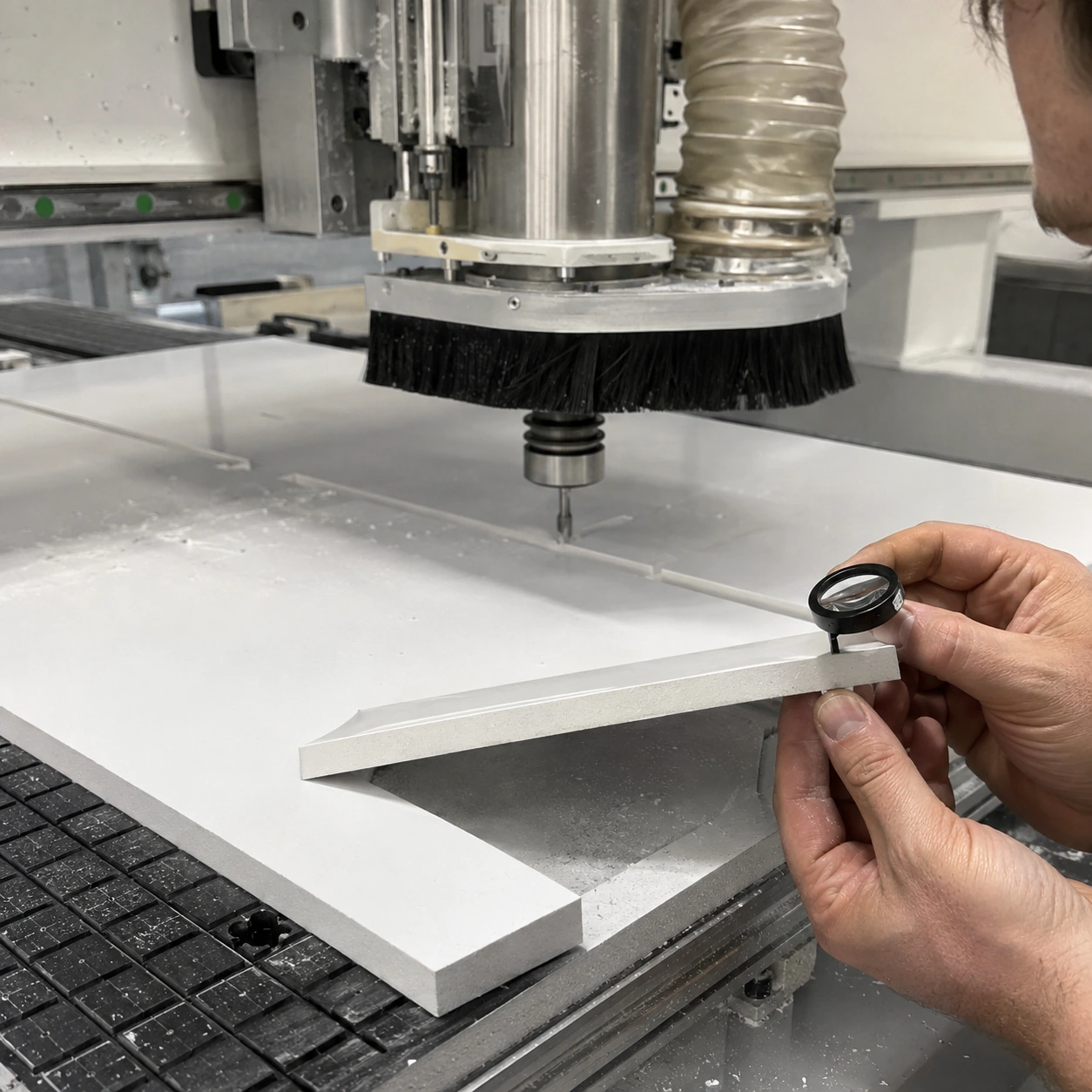
AI-generated CNC router cutting a rigid white PVC foam board with cut-edge inspection
AI illustration: inspecting CNC-cut PVC foam board at the machine.
4 · CNC edge quality

Melted or rough edges require a process-and-grade trial

Bit condition, spindle speed, feed rate, cut depth, chip evacuation, workholding and PVC foam board grade can influence heat, edge texture and dimensional accuracy. A generic setting cannot represent every board or part geometry.

  • Test the intended drawing, including corners, holes and thin sections.
  • Record tool, speed, feed, depth and chip-removal conditions.
  • Include later printing, laminating or fastening in the approval trial.
AI-generated warehouse flatness inspection of horizontally supported white PVC foam board sheets
AI illustration: checking PVC foam board flatness on a supported warehouse stack.
5 · Flatness and storage

Flat sheets need clean, dry and fully supported storage

Uneven support, leaning stacks, dirty faces, exposed corners or unsuitable strap pressure can affect a sheet before printing or fabrication. Storage and packing should match sheet size, grade, protective film and route.

  • Store identified sheets horizontally on a level support suited to their size.
  • Keep stacks aligned and protect faces, corners and edges.
  • Use an agreed flatness inspection method and acceptance point.
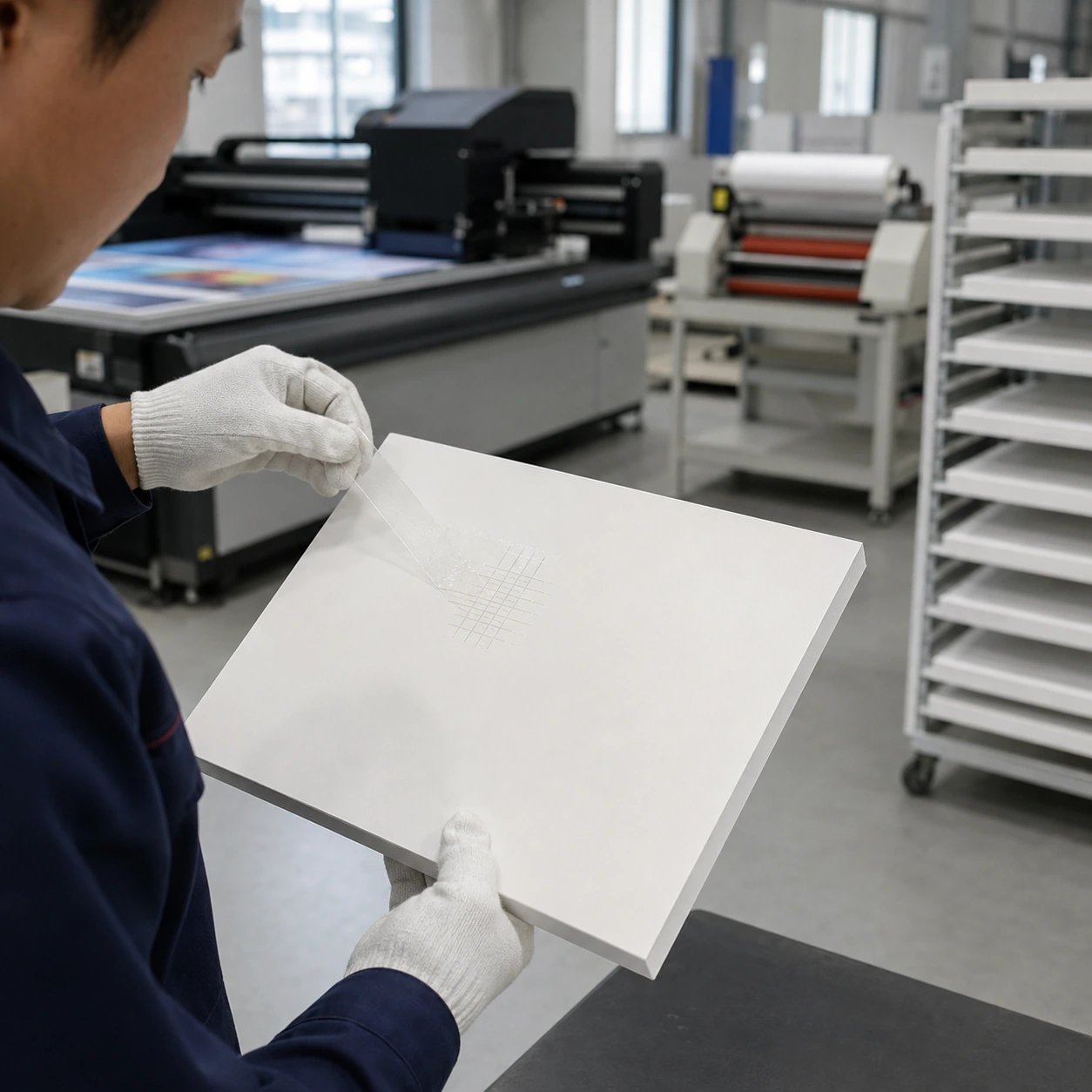
AI-generated crosshatch and tape adhesion test on a rigid white PVC foam board in a printing laboratory
AI illustration: controlled adhesion testing before PVC foam board printing or lamination.
6 · Surface adhesion

Printing and lamination must be proved on the actual surface

Board surface, film removal, cleaning, ink or adhesive chemistry, coating weight, pressure and curing can change adhesion. A test on another plastic or another board grade is not proof for the production sheet.

  • Use the intended ink, laminate, adhesive and finishing sequence.
  • Document surface preparation and the agreed cure or conditioning period.
  • Keep the approved panel so repeat lots use the same comparison method.
RFQ

Information needed for a useful troubleshooting sample

A symptom photo helps, but a reproducible review also needs the material, machine and acceptance context.

  1. Application and exact defect location
  2. Panel, decor or PVC foam board grade and approved reference
  3. Dimensions, finish, density or grade and order quantity
  4. Adhesive, ink, laminate, tool and machine conditions
  5. Representative sample, destination and written acceptance method
SOURCES

Primary technical references used for the diagnostic framework

Use these manufacturer documents as process references only. Confirm the current material, equipment and acceptance method with the responsible supplier, machine and adhesive or ink provider.

FAQ

Processing defect FAQ

Can one machine setting solve every glue-line problem?

No. The panel, adhesive, edge band, machine and ambient conditions interact, so a representative trial is required.

Does stress whitening always mean the color film is defective?

No. Tool condition, scraping, radius, material conditioning and finishing can contribute; inspect the complete process.

Why can PVC foam board melt during CNC routing?

Heat and edge quality can be influenced by the tool, speed, feed, depth, chip evacuation, workholding and board grade.

Do these images prove a JINYOU batch passed inspection?

No. They are AI-generated illustrations. Request current order-specific samples, QC records and shipment evidence.

Request a processing review

Request a processing review