A woodgrain film can look right on a phone screen and still be the wrong match for the finished panel. Before choosing by colour alone, bring the film, board and edge-band samples together. Use the same light, compare the visible finish, and write down what the sample actually represents.
All five visuals are AI-generated process illustrations, not photographs of a real factory, production batch or shipment. Product suitability, price, MOQ, tolerance, availability, lead time, packaging and documentation require current order-specific confirmation.

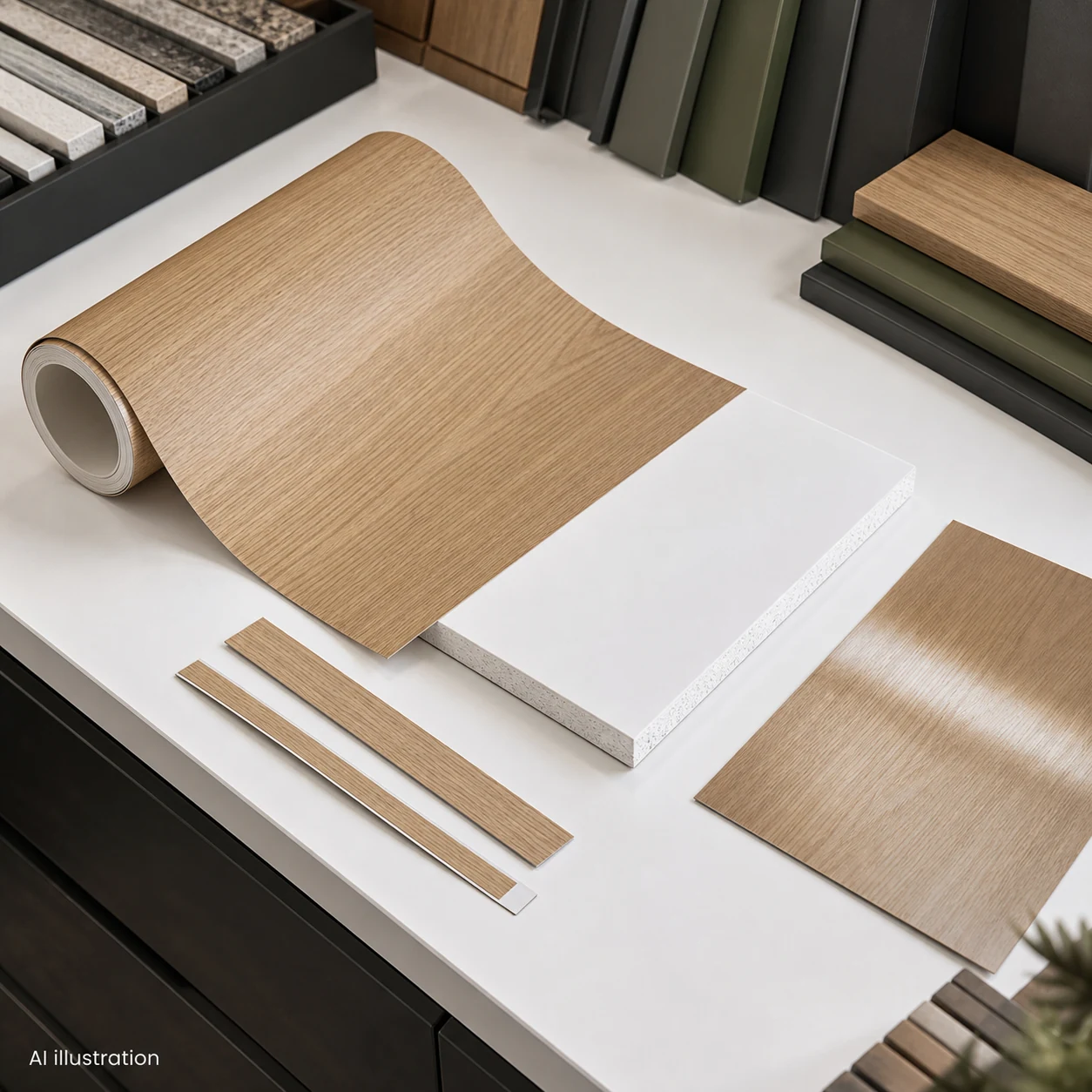
Place the PVC decorative film beside the intended board and edge-band samples. Compare grain direction, gloss and surface texture, then check the appearance from more than one angle. Keep colour, gloss and texture as separate approval fields. A loose film sample on a board is a visual comparison, not evidence that the combination is ready for production.

Once the appearance is agreed, specify the edge-band material, width, thickness and roll format. PVC and paper edge bands should not be treated as interchangeable simply because the decor looks similar. For the illustrated PVC export format, coils are individually bagged, separated in fitted cartons and sealed before pallet wrapping.

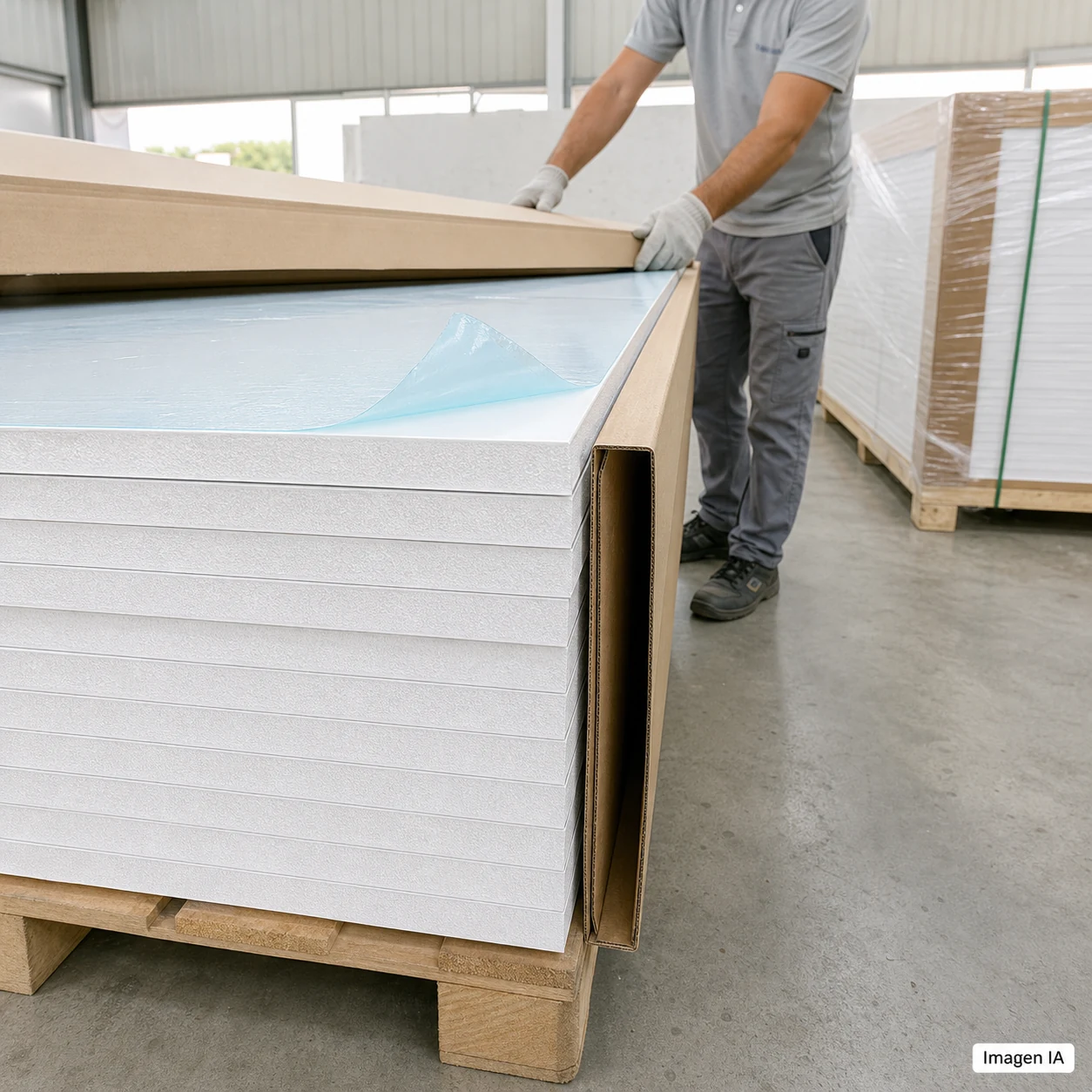
A close view of the board stack makes surface-film condition, visible corner damage and edge alignment easier to discuss. Confirm dimensions, thickness and the requested grade or density separately. Agree the protective film, top cap, edge guards and restraint arrangement around the actual sheet format and handling requirements.

The small 20 kg metal pail is a packaging format, not an adhesive performance specification. Start with the intended application, substrates and operating conditions. Confirm the selected PUR grade and its current technical and safety documents, then agree net weight, closure, storage instructions and carton support. The illustration does not establish a processing temperature or suitability for a particular line.

Boards, sealed edge-band cartons, protected PVC film rolls and cartonized pails have different shapes and handling needs. Review the packing-unit dimensions, weights, stacking limits and restraint points before deciding the loading sequence. A packing illustration is useful for discussion; the final plan must follow the actual shipment and carrier requirements.
Product and application; substrate; decor reference; colour, gloss and texture; width and thickness; roll or sheet format; quantity; packing requirements; destination. Add the sample approval criteria and the documents you need. JINYOU can review the request and confirm current options in writing.
No. Treat colour, gloss, surface texture and grain direction as separate checks, and confirm against the agreed physical reference.
No. The loose sample illustrates visual comparison only. Confirm the substrate, application process and product suitability before production.
No. Pail size is a packaging choice. Confirm the exact grade, intended application and current technical and safety documents separately.
No. These are AI-generated illustrations. Request current order-specific inspection and packing evidence when needed.