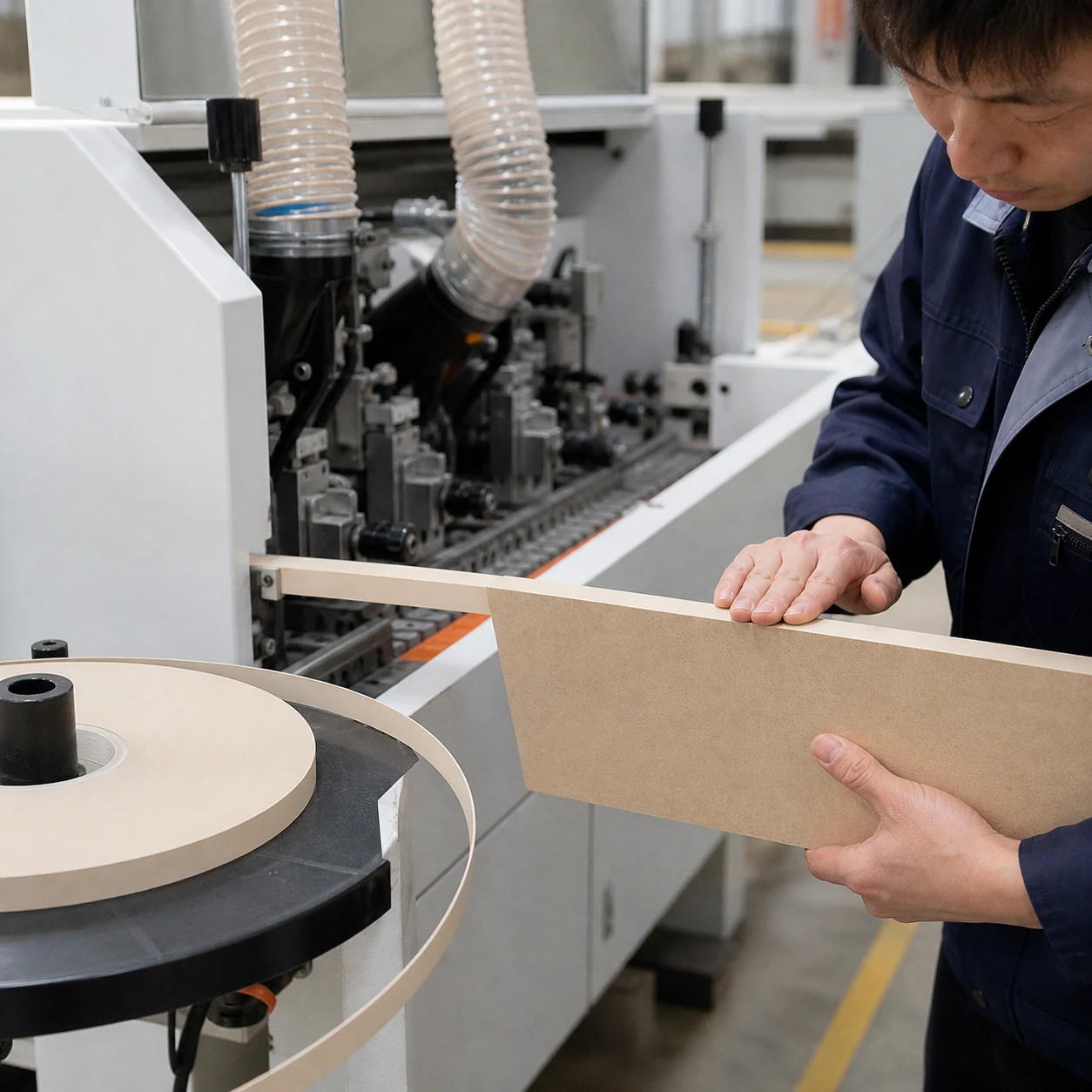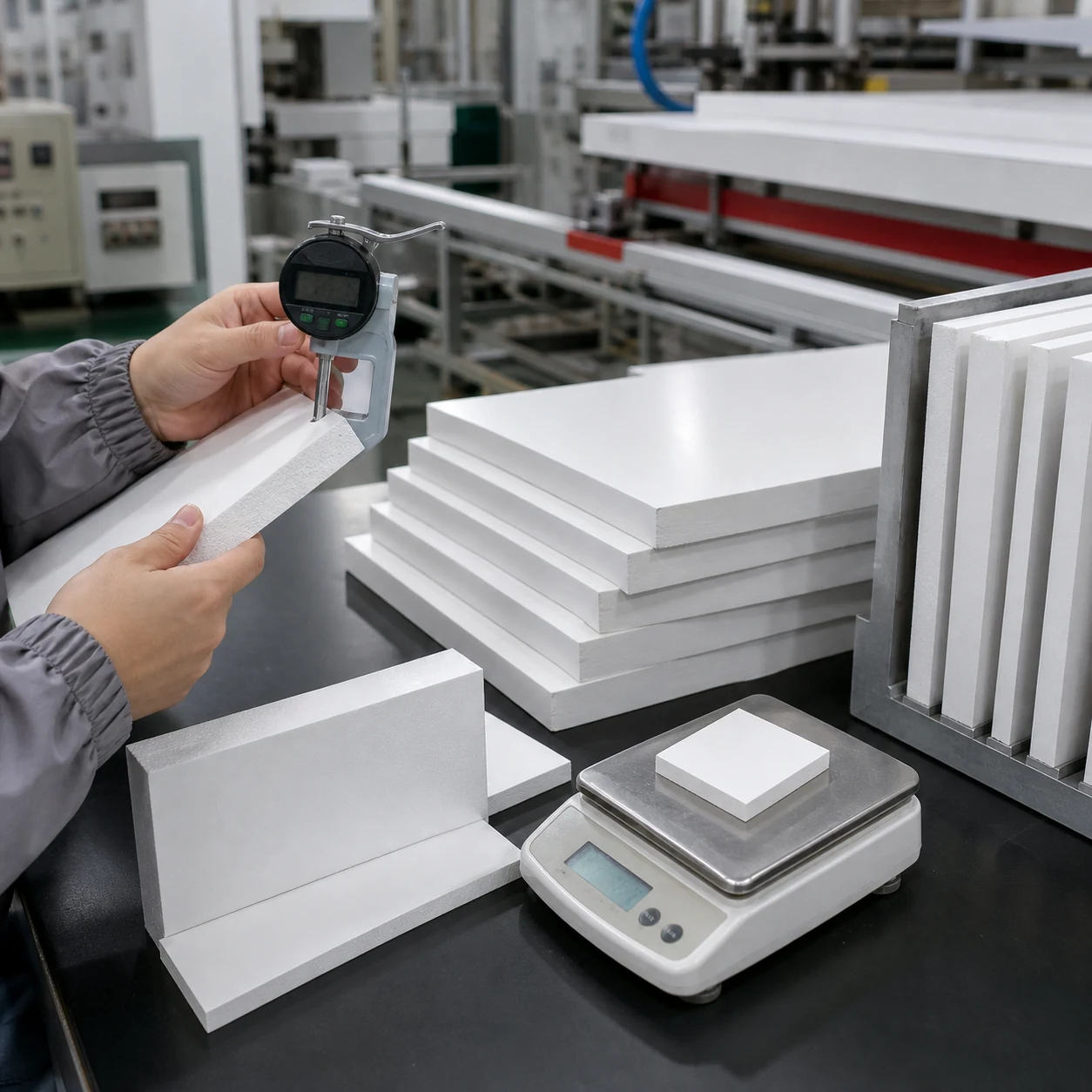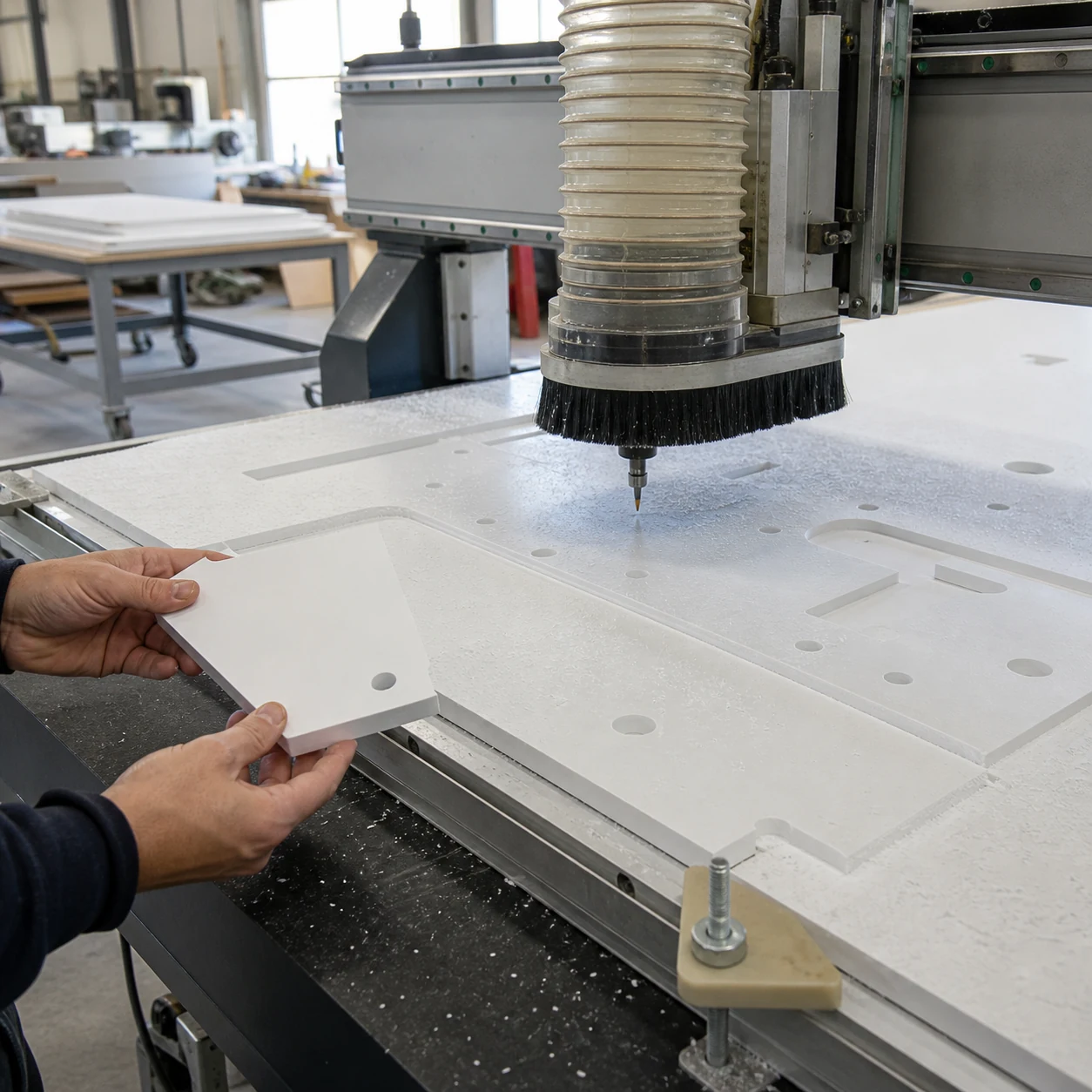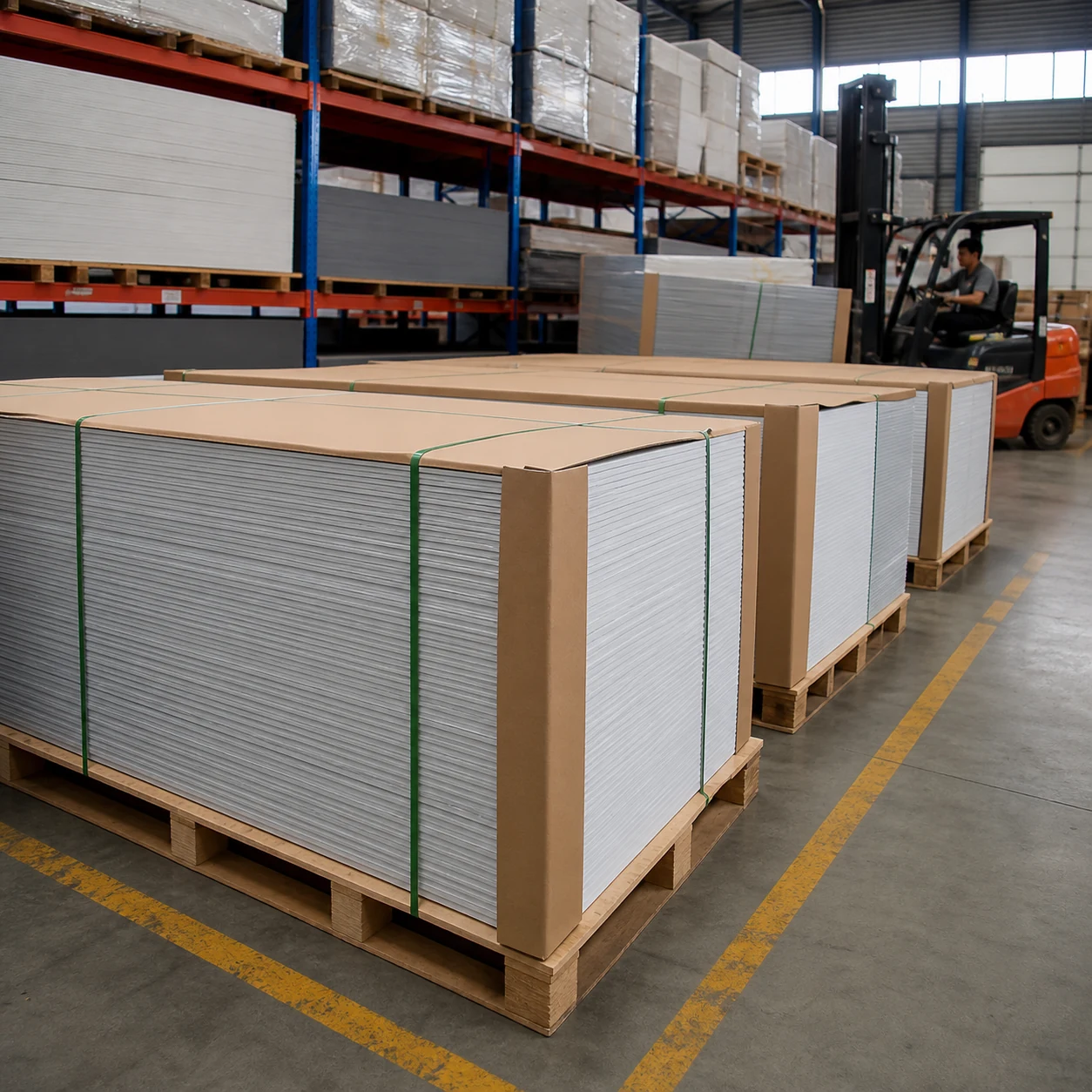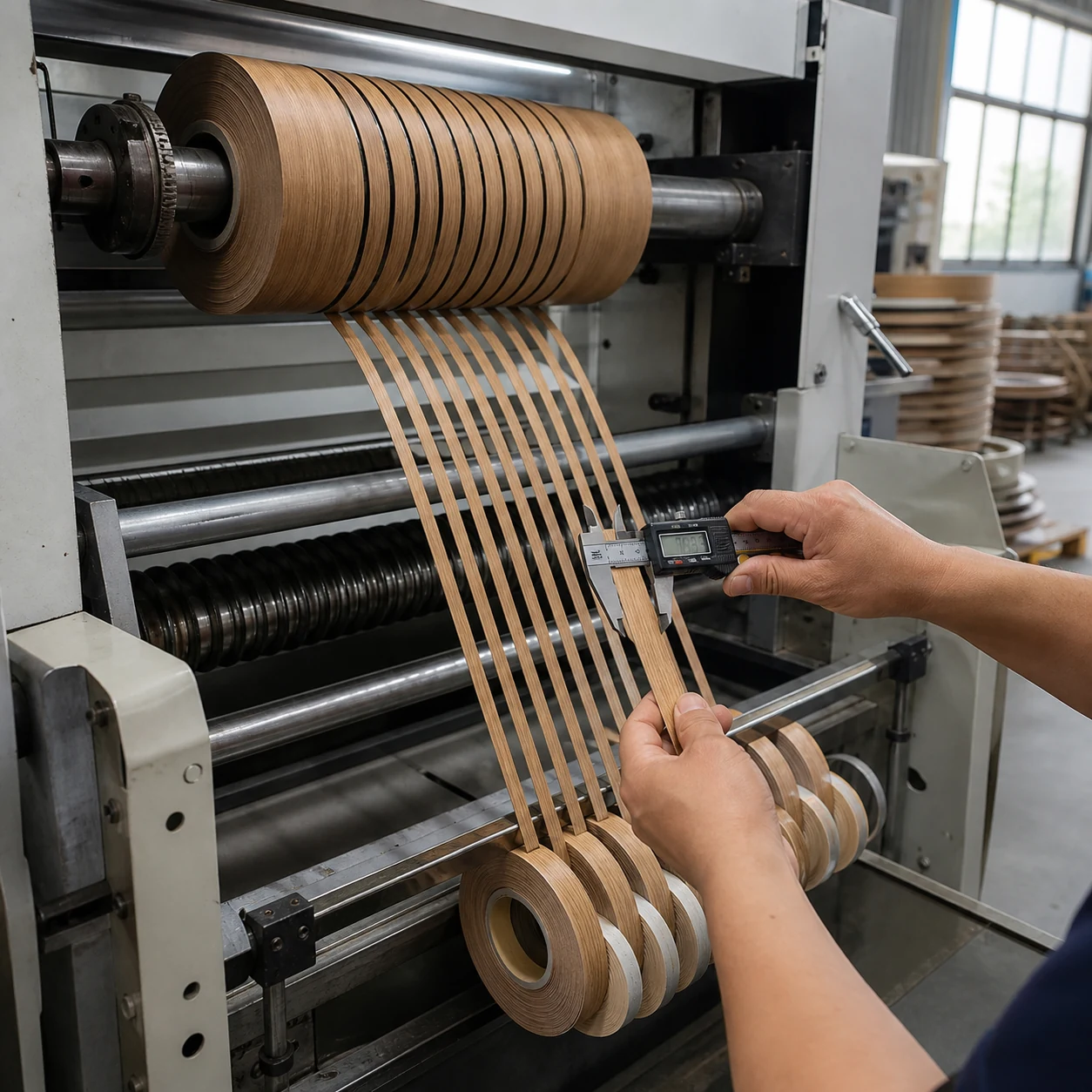
Reliable sourcing starts by defining the application and approved reference before production. For PVC edge banding, control slitting width, compare the decor and run an application trial. For PVC foam board, confirm thickness and density or grade, test the intended machining process and protect identified stacks in storage. The six scenes are AI-generated illustrations, not factory, stock or shipment records.
Visual disclosure: all six images are AI-generated process illustrations. They explain useful checkpoints but do not prove a specific production batch, inventory position or shipment.

A master roll becomes usable furniture edge banding only after it is slit to the approved width. Width, thickness, roll length, winding quality and decor identification should remain connected to the approved panel reference.

A visual match is only one part of approval. A short run on the buyer's intended panel, adhesive system and edge-banding machine can reveal glue-line appearance, trimming behavior, corner finish and surface sensitivity.

Warehouse control should separate similar decors and connect each roll to a readable product code, dimensions and batch reference. Physical segregation and scan-ready labels reduce picking errors when several shades look similar.

PVC foam board selection should reflect the intended fabrication and service conditions. Nominal thickness alone does not define performance, so the agreed density or grade, sheet dimensions, surface, weight and test method need to be recorded together.

CNC routing, cutting, drilling, printing, laminating and fastening place different demands on a foam board. A representative processing trial helps buyers compare edge quality, dusting, heat response, flatness and holding behavior before a larger order.

Finished sheets should be stacked on a suitable flat support, protected from dirt and impact, and identified so that the correct grade and dimensions reach packing. The final packing method must match sheet size, route and handling limits.
A useful RFQ describes the end use and approval method instead of requesting a generic 'best quality' product.
No. Confirm dimensions and surface, then run an application trial using the intended panel, adhesive and machine conditions.
No. Confirm the agreed density or grade, sheet weight, dimensions, surface and intended processing requirements together.
No. They are AI-generated illustrations. Ask for current order-specific production, QC, inventory and packing evidence.
Keep the approved physical sample, product code, written specification, trial settings, inspection method and batch identification requirements.