Direct answer
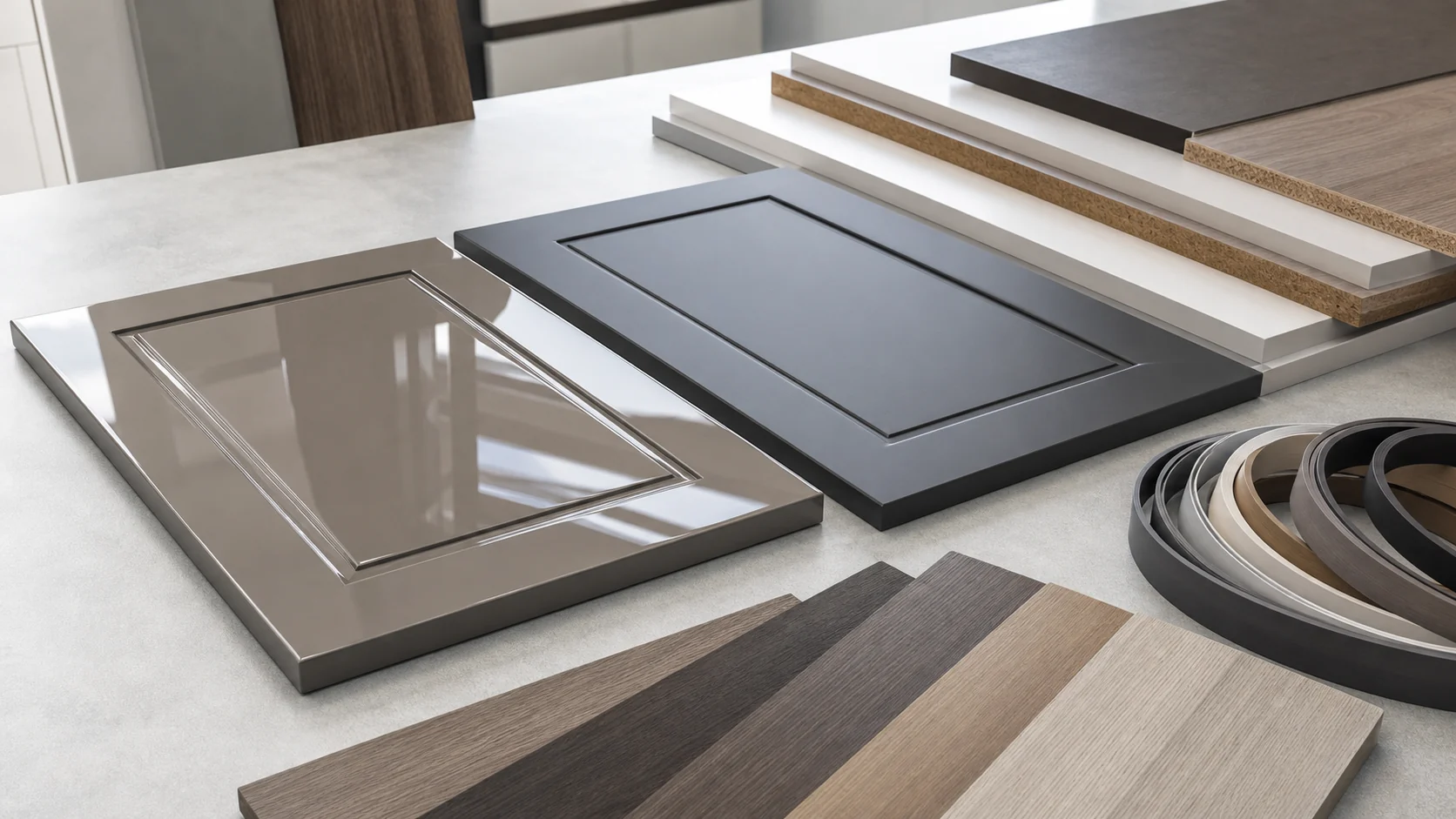
PET film cabinet door sourcing should connect four decisions: PET finish, board substrate, PUR flat lamination adhesive and matching edge banding. JINYOU can support these related materials so buyers can approve a complete door surface sample instead of isolated parts.
Buyer checklist
- Choose high gloss, super matt or anti-fingerprint PET by market style and cleaning expectation.
- Confirm MDF, PVC foam board, plywood or particle board substrate before sample production.
- Match PET edge banding or color-matched edge banding to the film sample.
- Ask for lamination testing and finished door sample approval before container planning.
Cabinet door material stack
A cabinet door surface normally combines the board core, PET film, lamination adhesive and edge treatment. If one part changes, the final surface and adhesion result can change too.
Where PVC foam board fits
PVC foam board can be considered for bathroom cabinet and moisture-sensitive projects, while MDF and plywood remain common options for many cabinet door programs.
Inspection points
Useful inspection points include film surface, gloss or matt consistency, edge color matching, board flatness, lamination defects, packing and protective film condition.
Related product and solution pages
Core JINYOU pages
FAQ
Is PET film only for kitchen cabinets?
No. PET film is also used for bathroom cabinets, wardrobes and other furniture panel surfaces.
Why match edge banding with PET film?
The door front and edge are seen together, so color and finish matching are important for commercial cabinet orders.
Need a matched surface material quotation?
Send application, substrate, film or finish target, thickness or width, quantity, destination port and sample or test report requirements.
Send RFQ